
Using Technology for Enhanced Marine Protection Through Legal Prosecutions
Global Fishing Watch

Global Fishing Watch is an international non-profit organisation dedicated to advancing ocean governance through increased transparency of human activity at sea. Founded on the belief that information about the ocean should be public knowledge, it seeks to enable fair and sustainable use of the ocean and its resources.
Global Fishing Watch harnesses cutting-edge technologies — such as satellite data, cloud computing and machine learning — to create and publicly share data, analysis and tools that transform vast amounts of data into actionable insights. By illuminating activities that were once invisible and making information such as ocean and vessel data available to those it affects, Global Fishing Watch empowers policymakers and authorities to make informed decisions. By engaging national governments and promoting transparency at the international level, it harnesses its global ocean mapping to combat illegal fishing, support scientific research, promote the conservation of marine biodiversity and ultimately strengthen accountability and drive equitable governance.
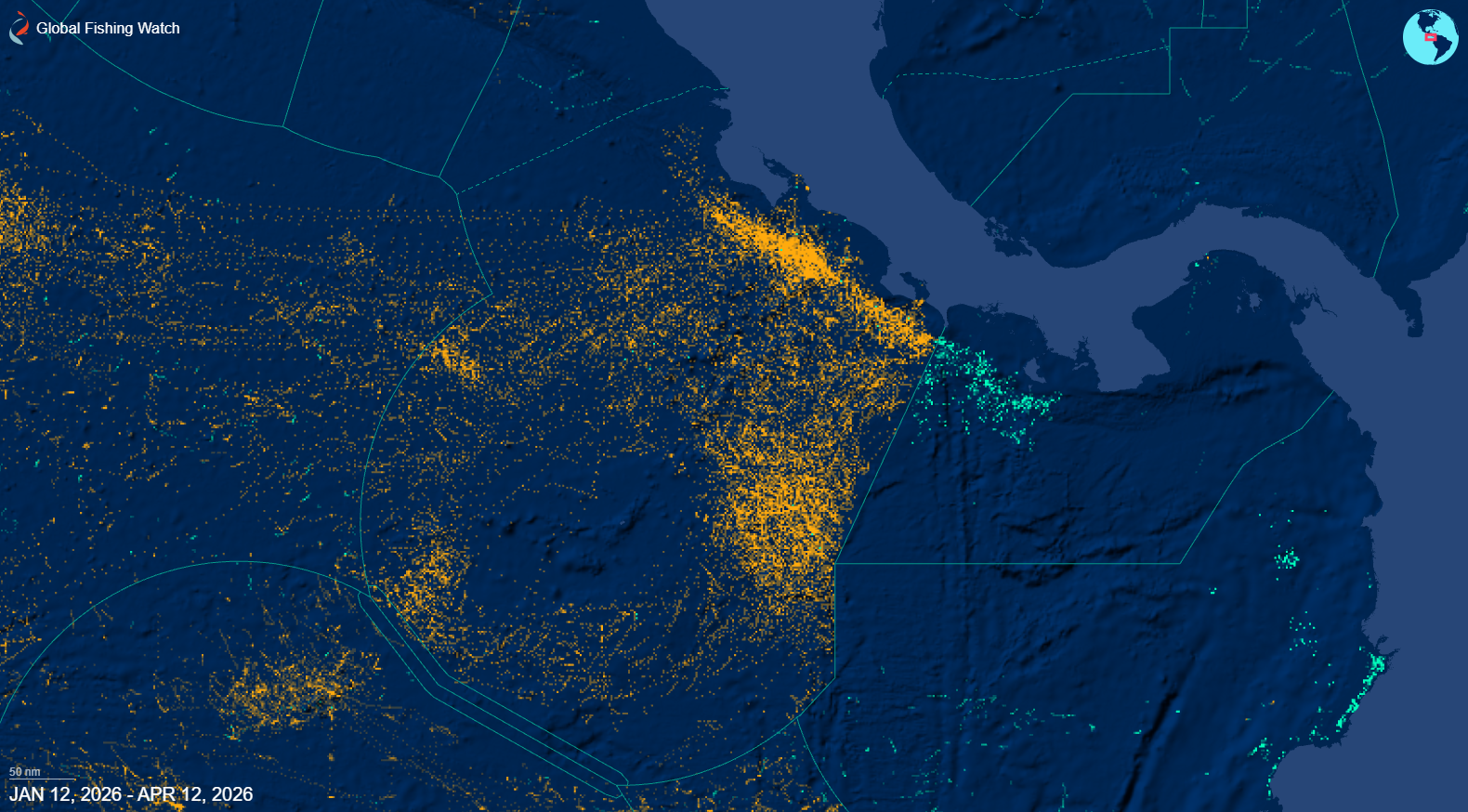
In Costa Rica, the Using Technology for Enhanced Marine Protection Through Legal Prosecutions project focuses on transforming data into accountability by applying Global Fishing Watch’s data and analytical tools to ensure that marine protection violations meet the evidentiary standards required for successful prosecution and judicial enforcement. By integrating satellite-based monitoring with legal and institutional processes, the project supports environmental legal organisations in identifying suspicious vessel behaviour and potential illegal activities at sea and building evidence for prosecution.
Through specialised training and technical support, the project strengthens the capacity of Costa Rican legal teams to enforce maritime laws and bolsters collaboration between civil society and government agencies to work together effectively. This approach helps bridge the gap between detection and accountability, ensuring that the country’s vast marine protected areas are not just designated on paper but are effectively defended in practice.

